
Parking Monitoring With No Sensors in the Ground
GoodVision Parking Monitor gives your city the live status of every parking space from cameras, existing or new. It flags overstays, vehicles across two bays and two vehicles in one bay, and pushes each event to your enforcement or parking-guidance system by webhook. It installs in a single day with no road drilling, and it runs today in Aarhus and Prague.

Every Space, Every Session
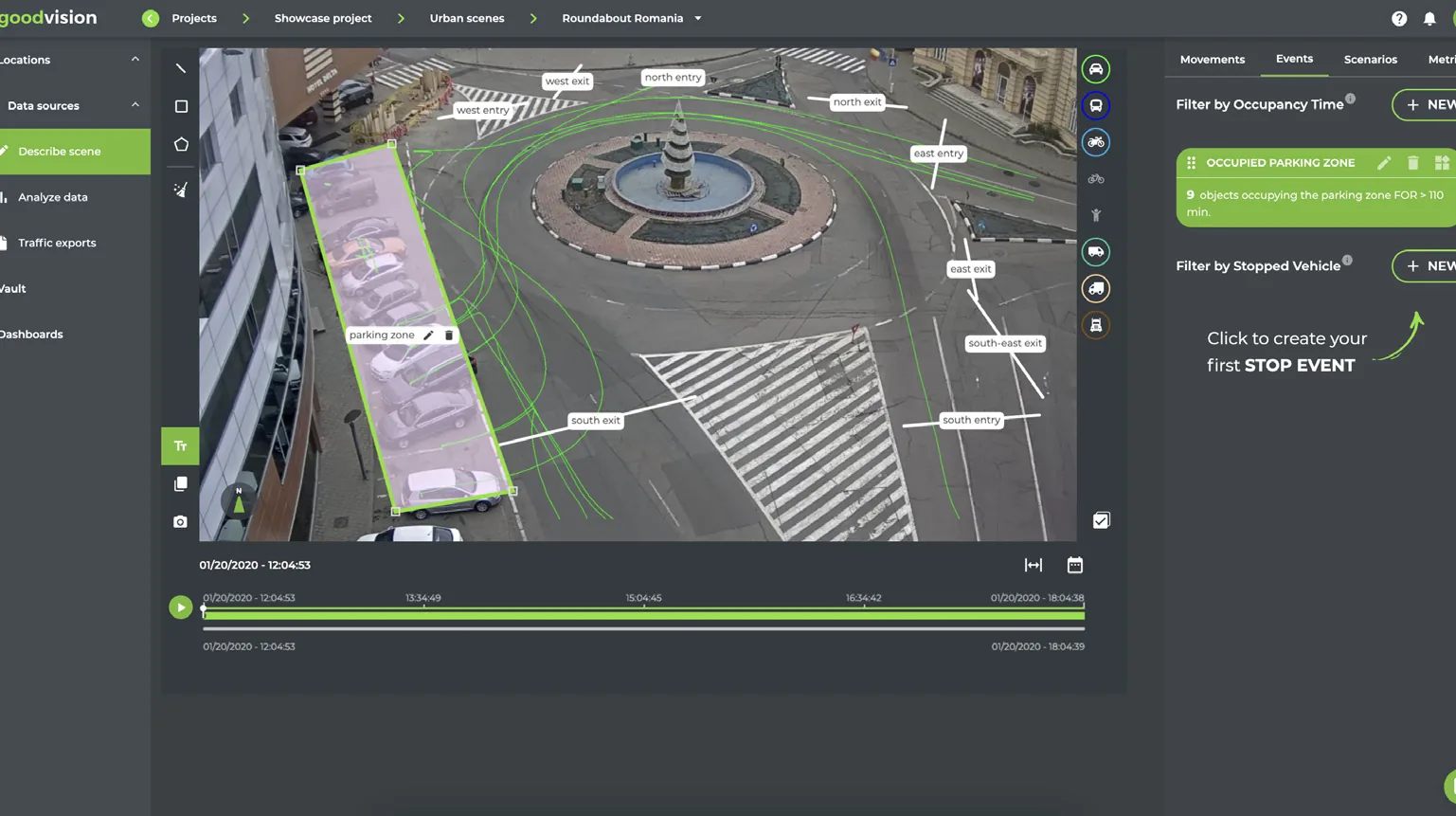
Parking Monitor assigns each bay its own space ID and area on the camera image, then tracks when each vehicle arrives and leaves. That gives you real-time occupancy, historical usage and automatic violation events from the same cameras, across parking lots, street parking and garages, 24 hours a day in all weather.
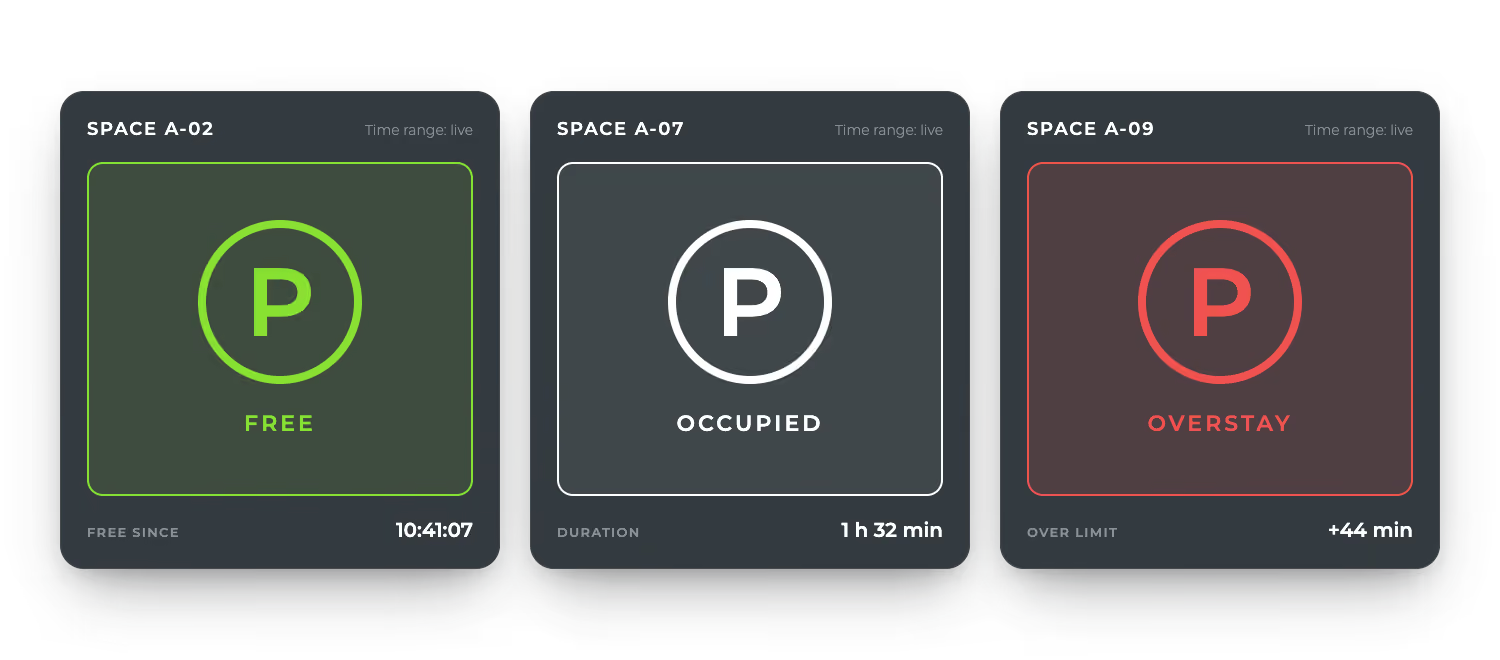
Real-Time Occupancy
The live status of every monitored space, with history kept so you can see usage by time of day and day of week.
Overstays
A violation event fires when a vehicle stays past the maximum parking duration you set for the zone.
Vehicles Across Two Bays
A violation event fires when one vehicle occupies more than one marked space at once.
Two Vehicles in One Bay
A violation event fires when more than one vehicle is detected in a single space.
Unauthorized Zones
Automated alerts for vehicles parked in restricted zones.
Zone Usage Analytics
Demand patterns across your zones, so you can match parking allocation to how the spaces are used.
Where Is GoodVision Parking Monitor Running?
GoodVision Parking Monitor is deployed in Aarhus, Denmark, and in Prague, Czech Republic, and the same solution has since been deployed in Germany. In Aarhus it monitors accessible parking, giving the city usage data it did not have before. For the wider picture of city traffic analytics, see Cities and Municipalities.
Aarhus, Denmark
Accessible-parking monitoring at two locations, one residential and one commercial near a train station, delivered through the EIT Urban Mobility RAPTOR program from October to November 2025. Heatmaps showed that accessible bays in the residential area were used more at night.
Prague, Czech Republic
A reference deployment of GoodVision Parking Monitor in the Czech capital.
Germany
The same parking solution has since been deployed in Germany.
Data That Reaches Drivers Too
Before the Aarhus pilot, the city had no reliable data on how its designated accessible bays were used, so it could not tell whether supply met demand. The dashboard runs on desktop and mobile, and in Aarhus it was also made available to drivers with disabilities, so they could check whether a bay was free before they set off. The cameras captured data through the low light of the Nordic winter.
How Does a One-Day Deployment Work?
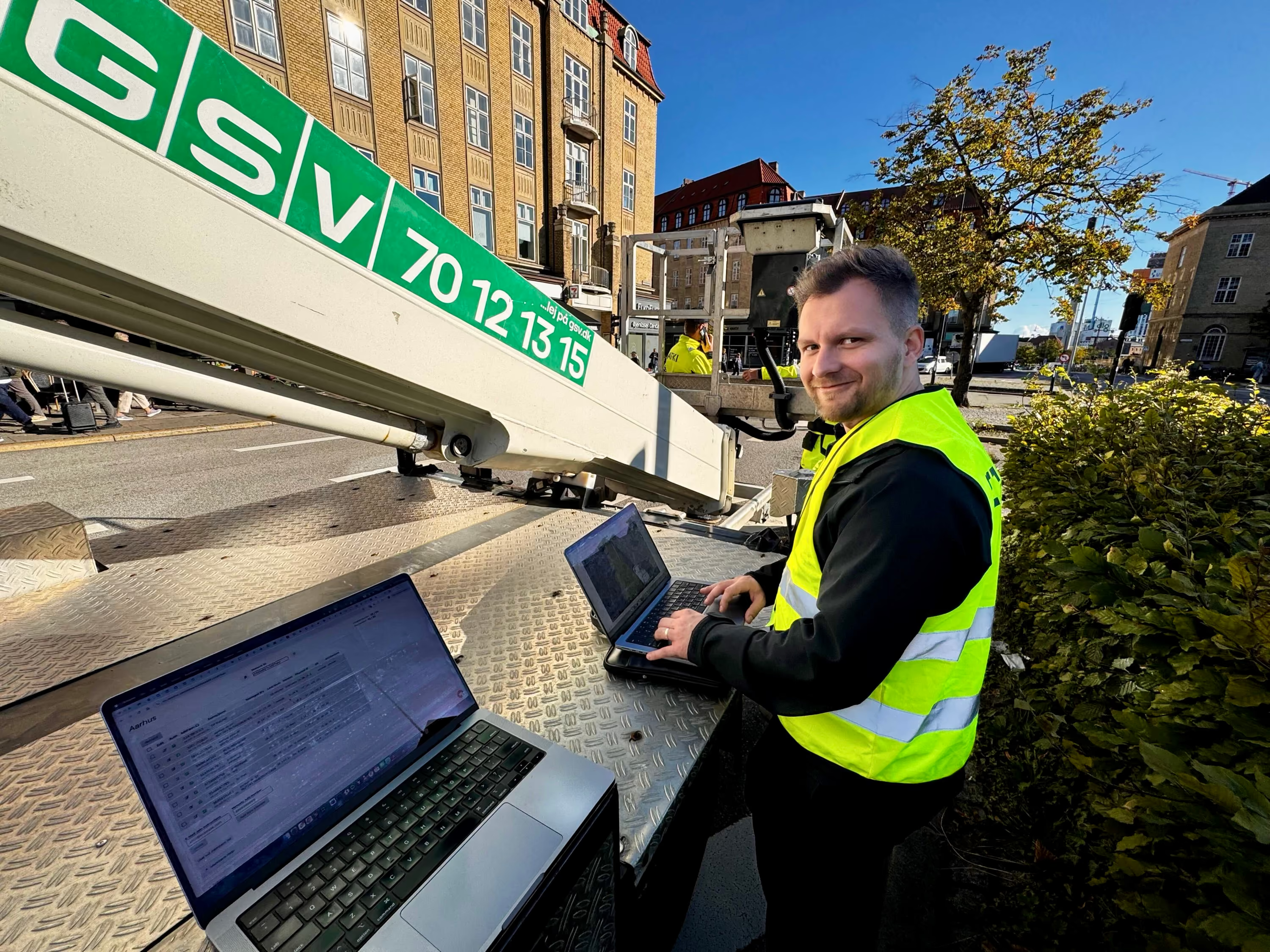
A Parking Monitor deployment takes one day on site. GoodVision assesses camera viewpoints remotely first, so one site visit is enough. Cameras go in and connect to an embedded AI unit, GoodVision engineers set up and validate the parking zones the same day, and your live dashboards and API access follow within hours.
1. Site Selection, Done Remotely
Satellite imagery and street-level data are used to check viewpoints, occlusions and lighting before anyone goes on site.
2. Hardware Installation in One Day
Cameras are installed to cover the selected bays, and every feed terminates on an embedded AI unit.
3. Zones Set Up the Same Day
GoodVision engineers connect the streams, define and fine-tune the parking zones and validate them.
4. Data Within Hours
Live dashboards and API access are available within hours of provisioning.
Events Pushed to Your Systems
Parking Monitor sends a webhook each time a parking session starts or ends, one for each violation type, and an optional periodic snapshot of occupancy across every monitored space at the interval you choose. That is how it feeds municipal enforcement and parking-guidance systems. Parking analytics sits in the GoodVision Live Traffic capability set, and it runs on the same city cameras as Intersection Monitoring.
Questions About Parking Monitoring
These are the questions cities ask before a parking pilot: how long installation takes, whether anything goes into the road, where the video goes, how events reach enforcement and what the pilot report tells you. Each answer gives you the facts behind it, so your parking, IT and data protection teams can check them.
How Long Does Installation Take?
One day on site. Viewpoints are assessed remotely first, cameras go in and are connected the same day, and live dashboards follow within hours.
Do We Need Sensors in the Ground?
No. Parking Monitor uses cameras only, existing or new.
Where Does the Video Go?
Inference runs at the edge. Only anonymized events and aggregates go to the cloud. Event images are not retained, and no biometric identification is used to classify a space.
How Do Events Reach Our Enforcement Team?
By webhook for every session start and end and every violation, plus live dashboards and API access. Short-lived evidence snapshots can be enabled on request for enforcement trials.
What Kinds of Parking Does It Cover?
Parking lots, street parking and garages, monitored 24 hours a day, 365 days a year, in all weather.
What Does a Pilot Report Show?
Per-space use by time of day, day of week and season, dwell time and turnover, uptime and data availability, and recommendations for scaling up.
Supported by EIT Urban Mobility
Supported by EIT Urban Mobility’s RAPTOR program. EIT Urban Mobility is an initiative of the European Institute of Innovation and Technology (EIT), a body of the European Union. Co-funded by the European Union.

Find Out How Your Parking Is Really Used
Tell us about one street, lot or garage and we will show you what a one-day Parking Monitor deployment would measure there.