
Traffic Analytics Software for Universities and Research
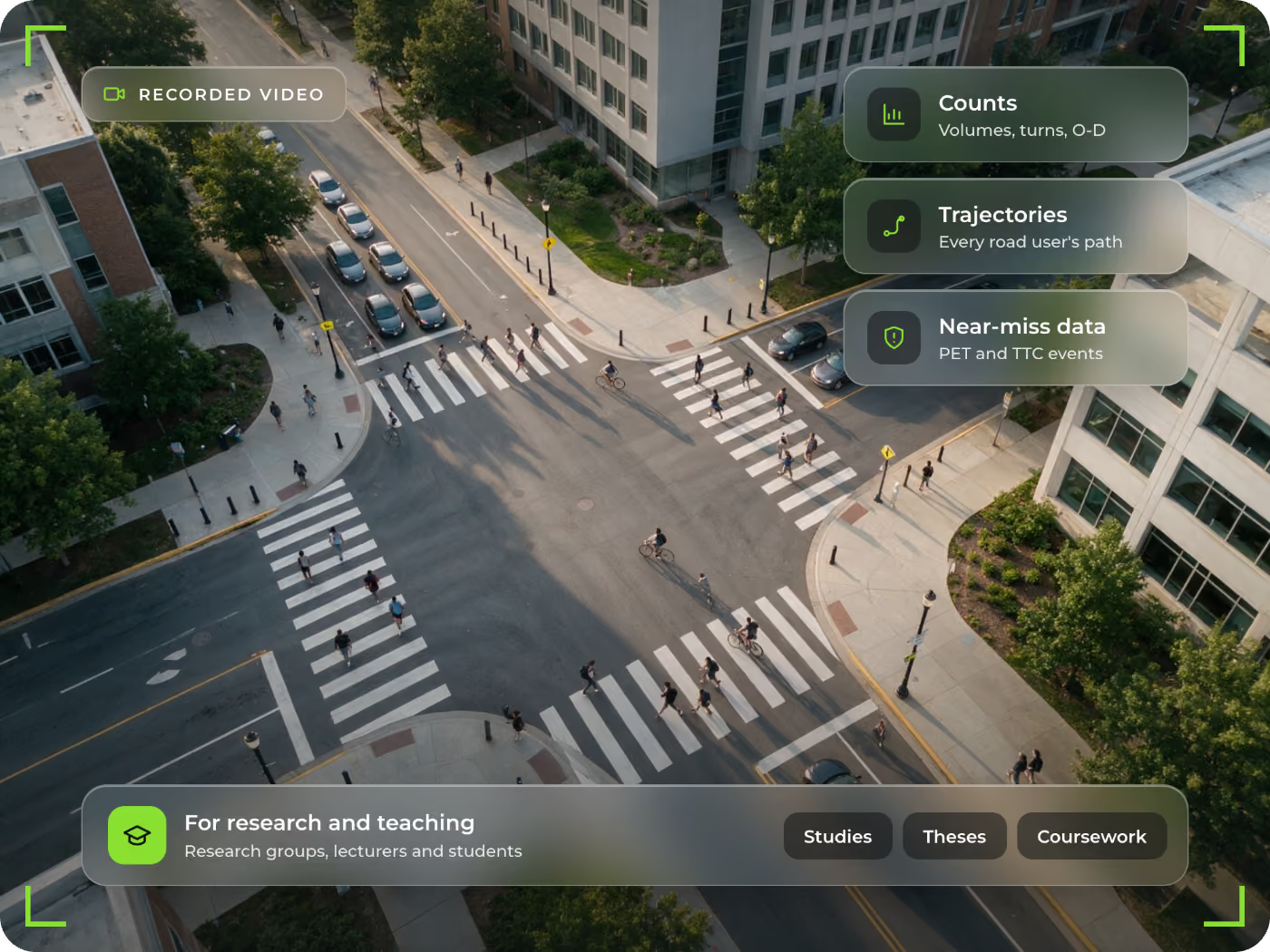
GoodVision University gives universities and research institutions access to the GoodVision platform for traffic research and teaching. Research groups, lecturers and supervised students use it to turn recorded traffic video into counts, trajectories and near-miss data for studies, theses and coursework. Contact us for academic terms.
Who Can Join GoodVision University?
GoodVision University is open to universities, transportation research centers and other academic institutions that use traffic data for research or teaching. Typical applicants sit in civil engineering, transportation and urban planning departments. Students apply through a supervising professor or research lead, who owns the project.
Research Groups
Faculty teams collecting traffic data for published studies, such as traffic safety research, driver behavior studies and multimodal planning.
Teaching Programs
Lecturers who want students to run real traffic surveys and safety analyses as part of a traffic engineering course.
Students and Researchers
PhD students and research assistants working on theses and research projects, under a supervising faculty member.
Traffic Data for Research and Teaching
GoodVision Video Insights extracts the full trajectory of every road user in a recorded video. You define movements, zones and gates in the platform, and every measure comes from that trajectory data without reprocessing the footage. One survey can then answer several research questions, and students can rework the same video.
Counts and Turning Movements
Classified counts for every movement you draw, on junctions, roundabouts and road sections.
Origin-Destination
Where each road user entered and left the scene, as a matrix ready for a traffic model.
Speed and Travel Time
Average and 85th-percentile speed, speed bins, travel time and the time gaps between vehicles.
Near-Miss Safety
Conflicts scored by post-encroachment time (PET) and time to collision (TTC), for vehicles, pedestrians and cyclists.
Pedestrians and Micromobility
A dedicated engine, on request, separates pedestrians, bicycle riders, scooter riders, personal wheeled riders, mobility aid riders and trolleys.
Camera and Drone Footage
Process video from fixed cameras, tripods or drones. Drone surveys use the global classification scheme.
Visual Outputs
Trajectory spaghetti diagrams, motion, acceleration and hold-up heatmaps, and Sankey flow diagrams, ready for papers, theses and lecture material.
Academic Access to the GoodVision Platform
A GoodVision University project works in the same GoodVision Video Insights platform that traffic consultancies use on client work. You upload the footage, run the analysis yourself and export the results to Excel, so your team keeps control of the method from the first count to the final table. Contact us for academic terms.
The Video Insights Toolset
Counts, origin-destination matrices, speeds, trajectories and safety metrics, with Excel exports for your own analysis.
Process Once, Report Often
Process a video once and build as many reports from it as your research needs, without uploading the footage again.
Your Data
GoodVision is transparent about data ownership, never trades customer data and protects it with premier security.
Academic Terms
Academic pricing depends on the project. Contact us with your project and we will tell you what applies to it.
Apply in Three Steps
Applications go through our contact form. Tell us who you are, what you want to study and what footage you have or plan to record. We reply with the academic terms for your project and the next steps, so you know what applies before any footage is uploaded.
1. Describe Your Project
Send the scope, the sites, the footage and the timeline through the contact form, and name the supervising faculty member.
2. Agree the Terms
We review the project and come back with the academic terms that apply to it.
3. Start Processing
Upload your first video and build your counts, trajectories and safety reports in the platform.
Questions Universities Ask
These are the questions research groups and lecturers ask before they apply: what it costs, who can apply, which product to use, what footage works, how accurate the data is and how it is protected. Each answer is short and gives you the facts behind it.
Is GoodVision Free for Universities?
Academic terms depend on the project, so contact us and we will tell you what applies.
Can Students Apply on Their Own?
Students apply with a supervising professor or research lead, who is responsible for the project.
Which Product Do Universities Use?
Most research and teaching projects use GoodVision Video Insights, which analyzes recorded video. If your project needs live camera streams, ask us about GoodVision Live Traffic.
What Footage Can We Use?
Recordings from fixed cameras, temporary tripod cameras and drones. A video needs to decode cleanly, and re-encoding usually fixes one that does not.
How Accurate Is the Data?
95%+ on counts and classifications, validated against manual counts. Stable, well-framed footage keeps it there.
How Is Research Data Protected?
GoodVision runs on premier security. Data is encrypted and securely stored, and you can sign in with Google, Microsoft and other identity providers.
Bring Your Research Project to GoodVision
Contact us with your project, your department and your footage, and we will come back with the academic terms and the next steps.