
Near-Miss and Near-Collision Analysis From Traffic Video
The GoodVision Traffic Safety Suite finds and scores near-collisions in traffic video using post-encroachment time (PET) and time to collision (TTC). It is built for road safety engineers, traffic consultancies and road authorities who need conflict evidence before a crash history exists. It runs on recorded video in Video Insights and on live streams in Live Traffic.
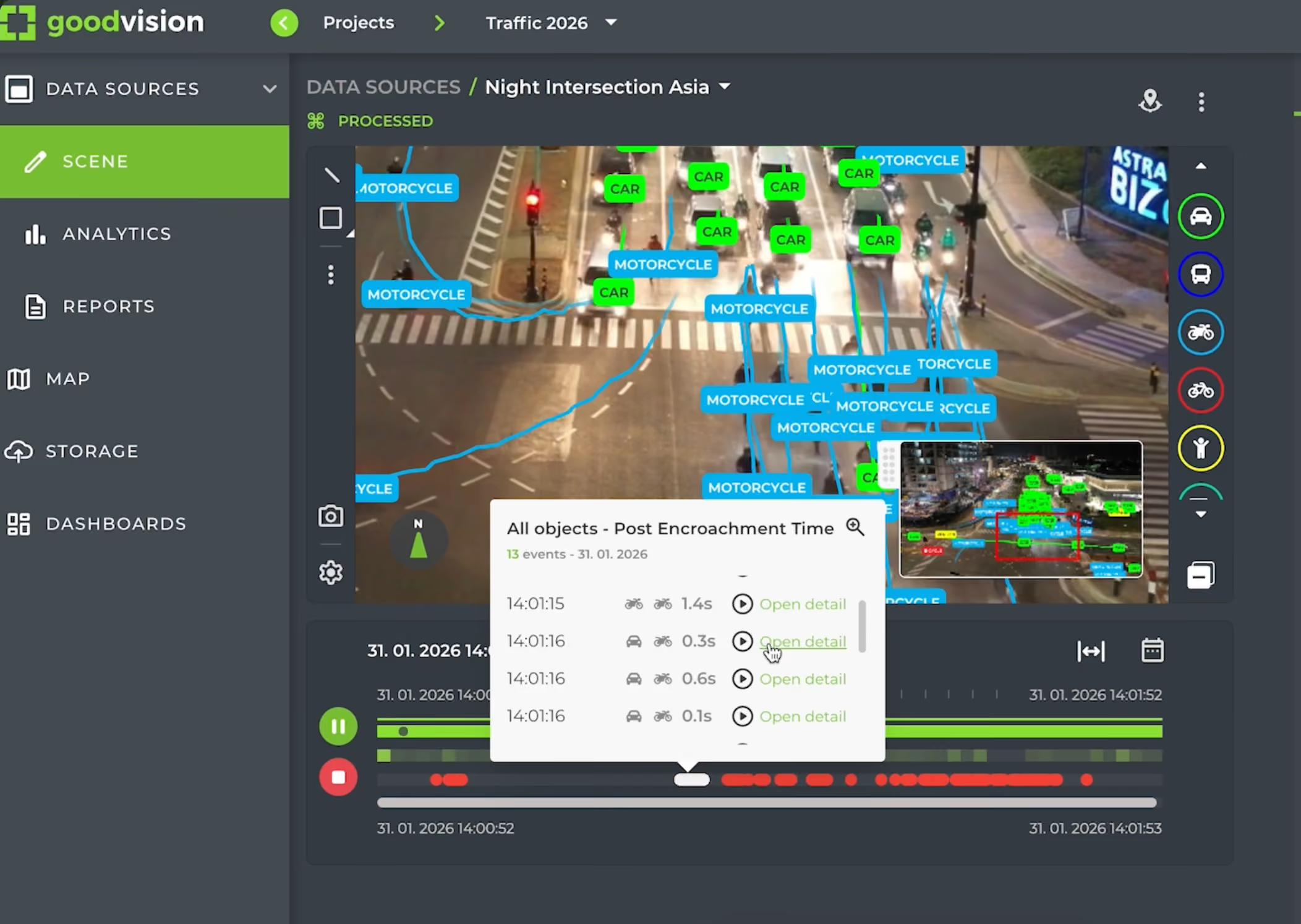
Road Safety Analysis by the Numbers
What Is Near-Miss Analysis?
Near-miss analysis measures how close road users came to colliding, using surrogate safety measures computed from their trajectories. Crash records take years to build a sample at one site. A near-miss study lets you judge the risk at a junction or crossing from footage recorded this month, and act before the crash record shows the problem.
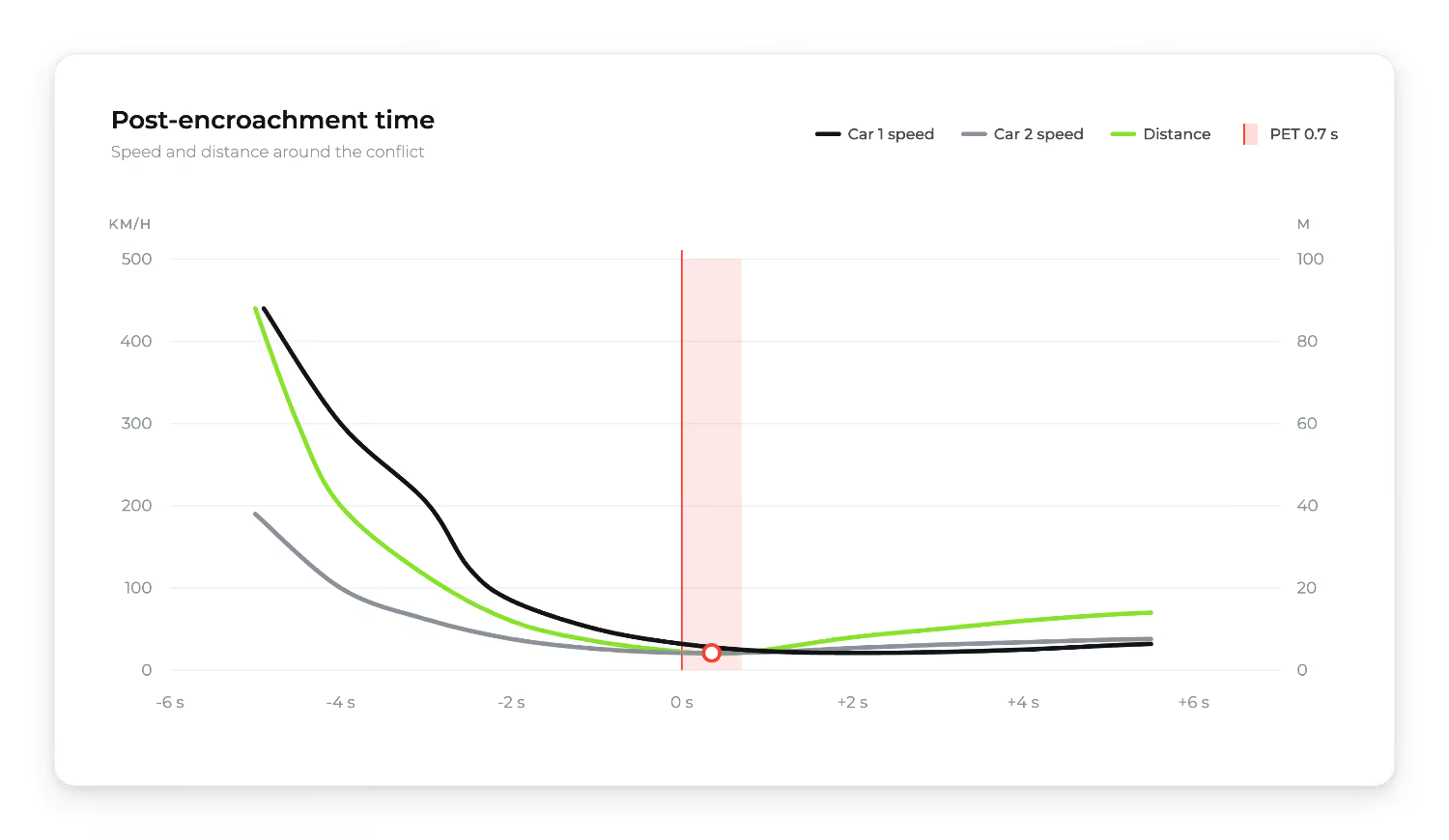
Post-Encroachment Time
PET is the time between two road users entering the same space. The shorter the gap, the closer the call.
Time to Collision
TTC is how long two road users had before they would have collided on their paths at that moment. You set the window anywhere from 0.1 to 1.5 seconds and filter by angle.
Every Road User
Vehicles, pedestrians and cyclists in one study, each conflict scored by the road user types involved.
Conflicts Measured Before the Crash
GoodVision measures near-collisions with PET and TTC, so you see where a site is dangerous before anyone is hurt there.
How Does a Road Safety Study Run?
A study runs in five steps, from filming the site to exporting the conflict report. The AI extracts every trajectory, you calibrate the scene to real-world distances, and then you set the thresholds, conflict zones and road user combinations the study needs. Each flagged event keeps its video, so your engineers can check it.
.avif)
1. Capture Video
Film the site with a fixed camera or a drone that has a clear view of the conflict area.
2. Upload and Process
Upload the footage. GoodVision AI detects every road user and extracts its trajectory in the Safety Metrics step.
3. Geo-Calibrate
Mark reference points on the scene to translate pixel positions into real-world measurements.
4. Configure Metrics
Set PET thresholds, conflict zones and the road user class combinations you want to study.
5. Analyze Results
Review each conflict event with its video evidence, then export a detailed Excel report.
Share the Evidence
Share a PET or TTC event detail page with your client or colleagues by public or internal link.
What Do You See in a Safety Study?
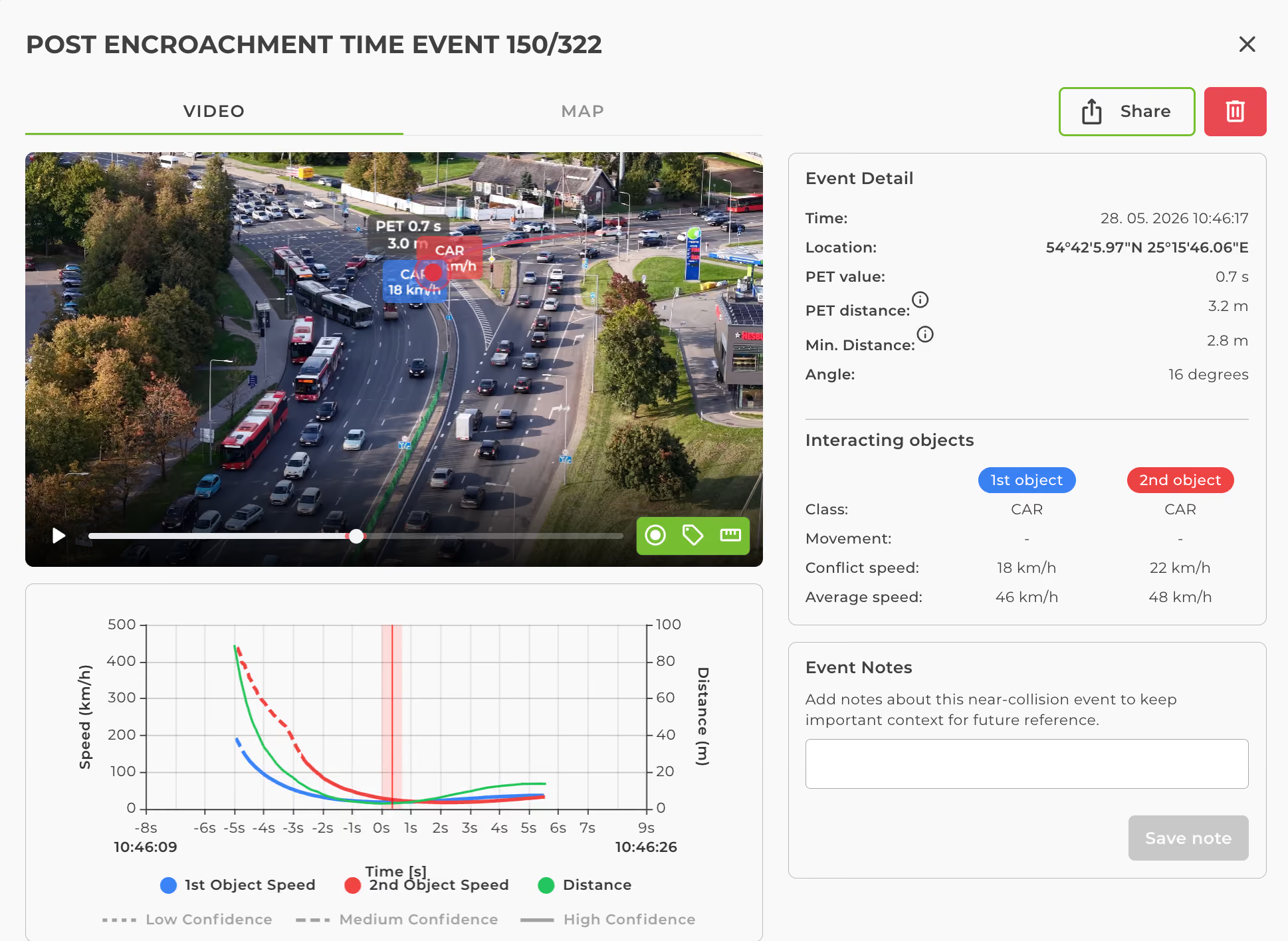
Results come as charts, maps and Excel reports built from the scored conflicts. You see how close each conflict was, how fast the road users were moving and where on the scene the conflicts cluster. Every point links back to the event, so a chart in your report is backed by footage your client can watch.
Distance Scatter Chart
Conflict distances plotted against other traffic parameters, to separate close calls from routine interactions.
Speed Scatter Chart
The speeds of road users during each near-miss, to see whether speed drives the risk at the site.
Spatial Heatmap
Where near-miss events concentrate across the intersection or corridor.
Collision Points Map
The points on the scene where conflicting paths meet, for targeting a design change.
PET and TTC Reports
Post-encroachment time and time to collision reports in .xls format, ready for your study appendix.
Video Evidence
The clip behind every conflict event, so an engineer confirms it before it drives a decision.
TTC on Recorded Video
On recorded video in Video Insights, post-encroachment time is a metric that drives widgets and reports, while time to collision comes as an Excel report. On live streams in Live Traffic, both PET and TTC run as scenarios with their own widgets. For the wider set of dashboard widgets, see Traffic Data Analytics.
Should You Study Recorded Video or Live Streams?
The Traffic Safety Suite runs in both GoodVision products. Use recorded video for a study at a set of sites with a report at the end. Use live streams when you want to keep scoring conflicts at a location after the treatment goes in. The PET and TTC measures are the same in both.
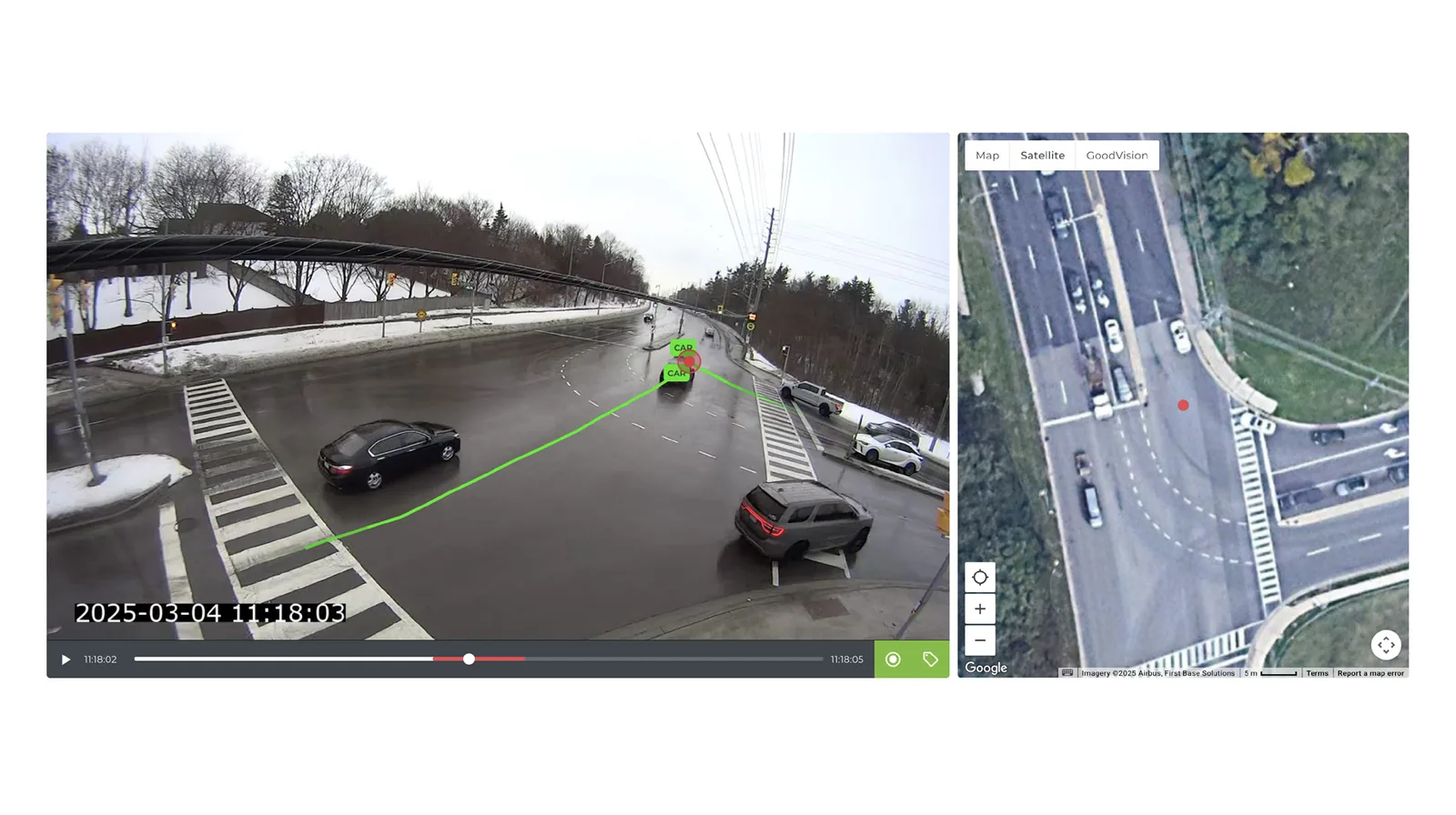
Recorded Video
Upload footage to Video Insights for a before-and-after study, a road safety audit or a design justification. Record the site with the same survey footage you count from.
Live Streams
Run PET and TTC scenarios on live camera streams in Live Traffic, with count heatmaps, distance and speed scatter charts and an event list per scenario.
A Clear Camera View Is Enough
Both work with existing camera infrastructure and need only a clear view of the conflict area.
Pedestrians and Cyclists
A dedicated Micromobility Engine, available on request, gives more precise near-miss detection for pedestrians and cyclists.
Questions Road Safety Engineers Ask
These are the questions that come up before a conflict study is commissioned: what GoodVision measures and how the results stand up in front of a client. For how safety work fits a consultancy's wider survey practice, see Traffic Consultancies.
Does GoodVision Detect Crashes?
No. It measures near-collisions with post-encroachment time and time to collision, from the trajectories of every road user in the video.
What Is the Difference Between PET and TTC?
PET measures the time between two road users entering the same space. TTC measures how long they had before they would have collided on their paths at that moment.
How Much Faster Is It Than Manual Review?
90% faster than reviewing the video by hand, and 80% lower in cost than traditional forensic road safety analysis.
Can I Study Pedestrians and Cyclists?
Yes. Vehicles, pedestrians and cyclists are scored in the same study. The Micromobility Engine is available on request.
Do I Need Special Cameras?
No. A fixed camera or drone with a clear view of the conflict area is enough.
Can My Client See the Evidence?
Yes. Every conflict keeps its video, and you can share a PET or TTC event page with your client by link.
Find the Near-Misses at Your Riskiest Junction
Send us a recording of a site you are worried about and we will show you the conflicts it already contains, scored by PET and TTC.