
Safer, Better-Run Streets for Cities and Municipalities
GoodVision turns your city's CCTV or supported AI cameras into traffic data for your traffic engineers and operations teams. One platform covers intersection monitoring, signal performance, parking monitoring and real-time traffic monitoring, on cameras of any brand, with counts at 95%+ accuracy, validated against manual counts.
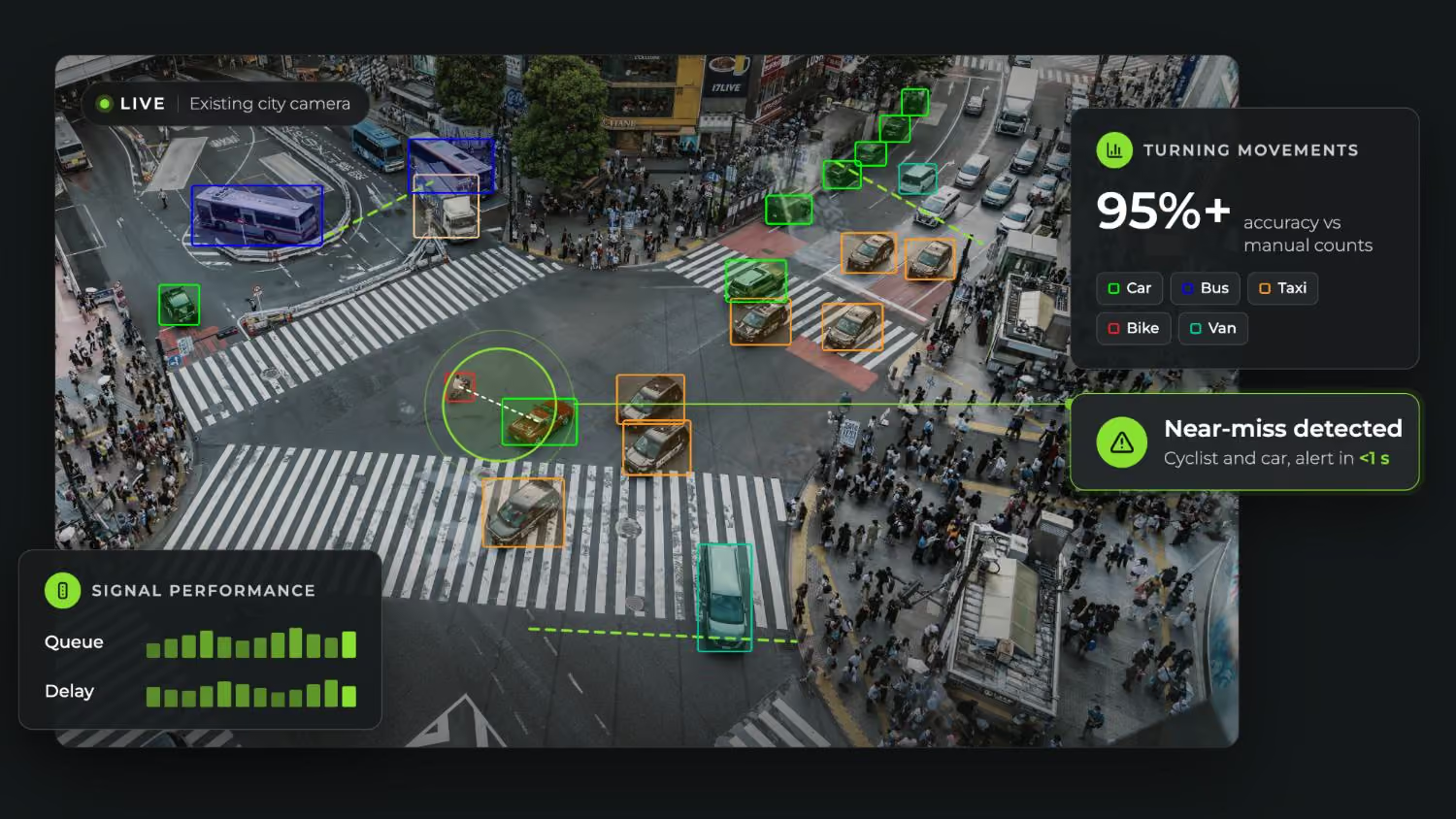
City Traffic by the Numbers
TSMO Runs on Data Most Cities Lack
Transportation systems management and operations (TSMO) means running the network you already have, better. Active signal management, conflict management and performance-based decisions all depend on continuous, ground-truth data from every intersection. Most agencies still rely on occasional manual counts and years of crash records, which is too slow for any of the three.
Continuous Situational Awareness
Real-time, ground-truth data on every vehicle, pedestrian and cyclist, on every approach and every movement.
Proactive Conflict Management
Near-misses and high-risk interactions surfaced before they become crashes.
Performance-Based Investment
Turning movement counts, delay, queues and signal performance measured for retiming studies and funding cases.
Where Do Today's Intersection Systems Fall Short?
Most intersection systems were bought one function at a time. Counting, pedestrian detection, enforcement and conflict analysis each came from a different vendor, and the data rarely meets. That leaves four gaps, and each one weakens the case for your next signal retiming or safety project.
Pedestrians and Cyclists Go Undercounted
Many video systems undercount pedestrians and cyclists far more than motor vehicles, so the most vulnerable road users are the least visible in your data.
Counts and Signal Timing Stay Disconnected
Rich counting data sits in one system and signal performance in another, with no automated link between them.
Every Function Needs Its Own Vendor
Counting, pedestrian detection, enforcement and conflict analysis each come with their own cameras, calibration and dashboard.
Safety Analysis Waits for Crashes
Most Vision Zero programs still run on crash history instead of leading conflict indicators, so risk shows up only after someone is hurt.
One Vendor for Every Intersection Function
GoodVision ships turning movement counts, signal performance, near-miss safety analytics, violation detection and CV/V2X data delivery as one platform. You maintain one camera integration, one calibration process and one dataset into your ATMS, with the analytics already built on top of the raw detections.
The Typical Point-Solution Approach
- A separate vendor for counting, pedestrian detection, enforcement and conflict analysis
- Each tool with its own camera requirements, calibration and dashboard
- Counts in one system and signal timing in another, rarely connected
- You become your own analytics developer, building logic on raw detections
GoodVision for Intersections
- One platform for counting, safety, signal performance and violation detection
- One camera integration, one calibration process and one coherent dataset
- Trajectory data fused directly with SPaT for closed-loop insight
- Production-grade algorithms, ready to run
Intersection Monitoring
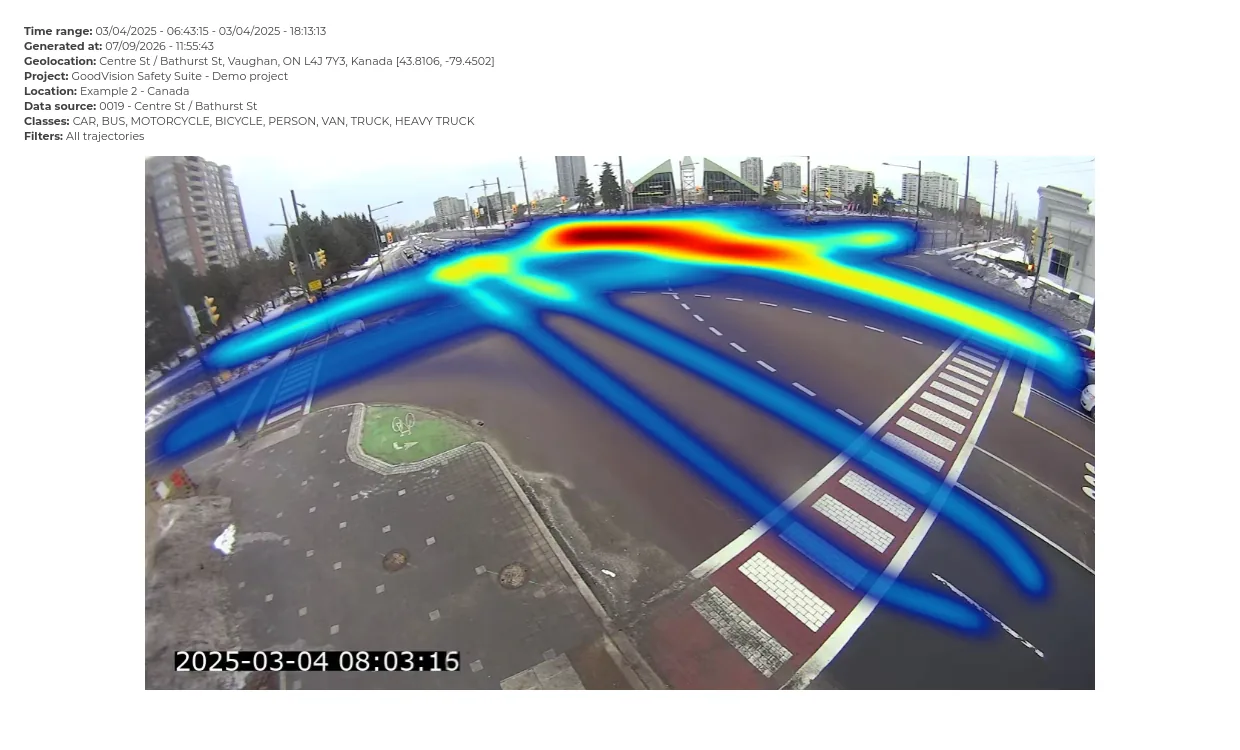
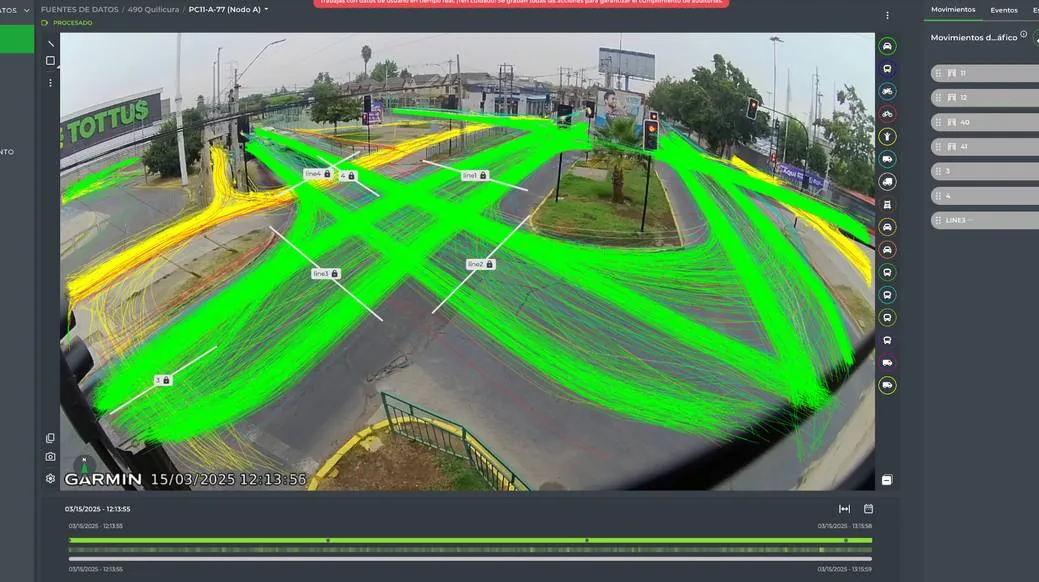
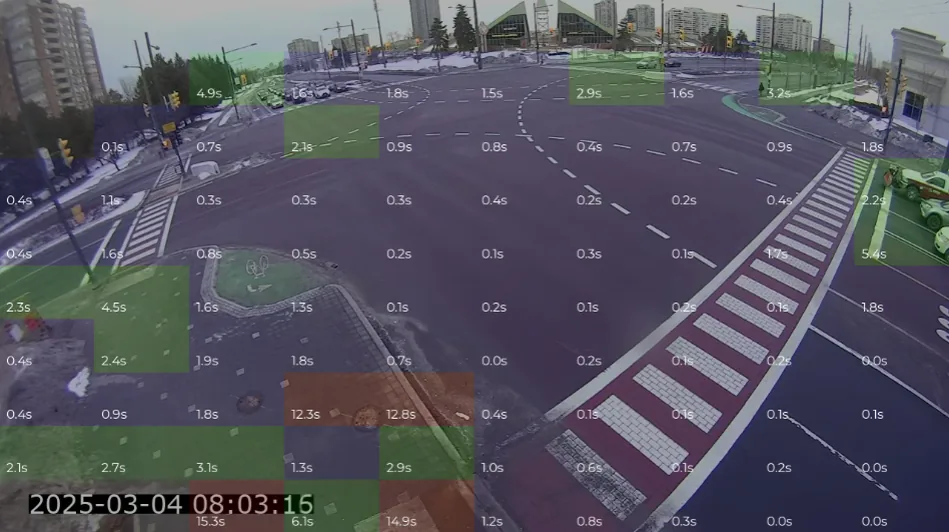
GoodVision follows every vehicle, pedestrian and cyclist through your junctions as a full trajectory. From that one dataset your engineers get classified turning movement counts, origin-destination pairs, speeds and delay, plus near-miss safety analysis scored by post-encroachment time (PET) and time to collision (TTC). Run it live or on recorded video.
Classified Turning Movement Counts
Counts per movement and per road user class at 95%+ accuracy, validated against manual counts, with a Peak Hour report and an OD Matrix from the same data.
Live Violation Events
Wrong-way driving, speed limit violations, vehicle stops and illegal parking reach your traffic management center as live violation events over HTTPS in under a second.
Live or Recorded
Monitor a junction around the clock with GoodVision Live Traffic, or run a study on recorded video with GoodVision Video Insights, which processes traffic camera footage within hours.
Signal Performance
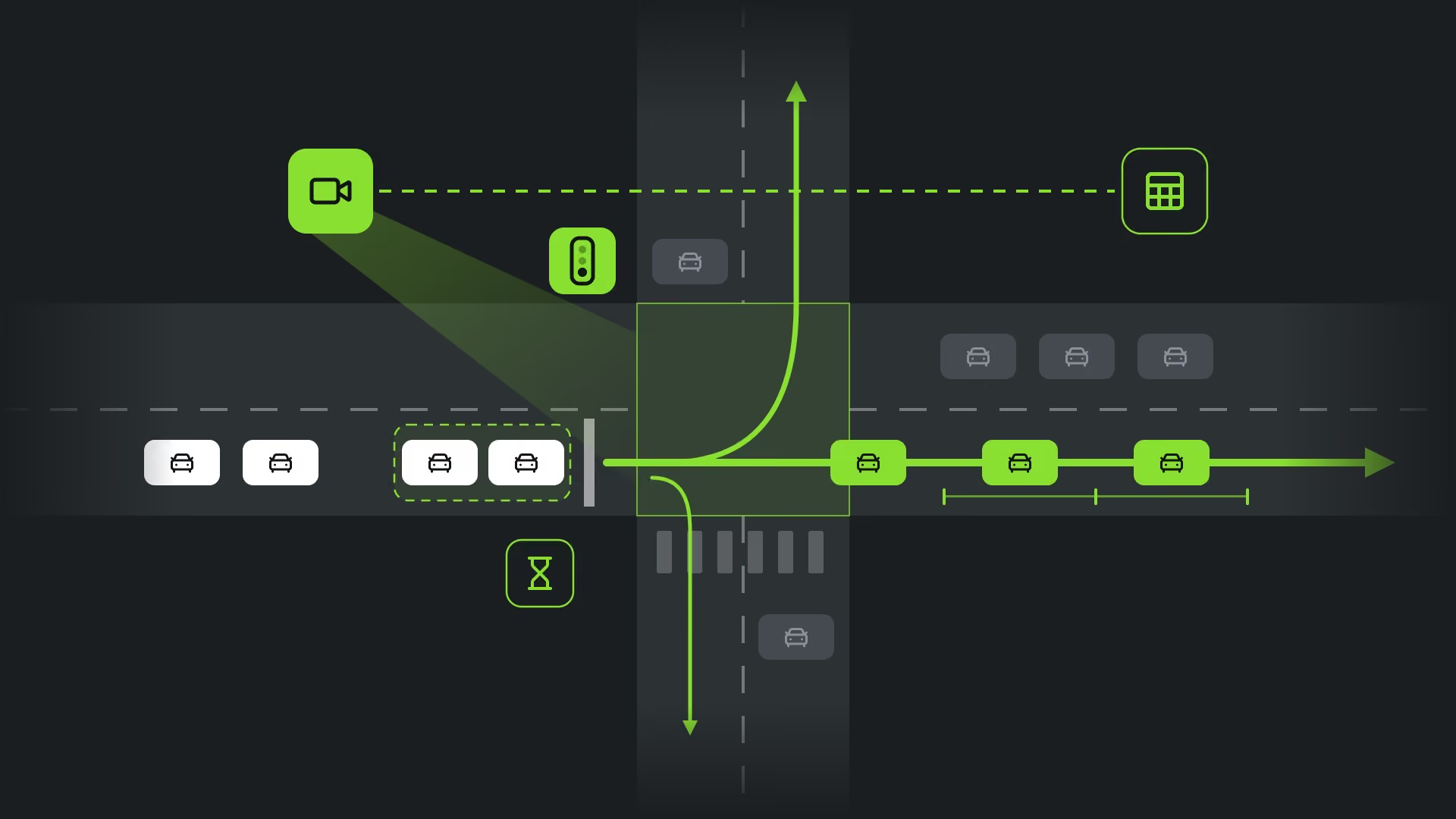
A signal retiming study needs to know how much traffic wants each movement, how fast a queue discharges and how long road users wait. GoodVision measures all three from one camera view, as classified turning movement counts, saturation flow and occupancy time, and exports every report to Excel for your timing tools.
Saturation Flow
The Saturation Flow report measures how fast traffic discharges from a stop line once it gets green.
Before-and-After Studies
Record the junction before and after a timing change, then run the same reports on both. One processing run supports as many reports as you need.
Into Your Signal Systems
GoodVision Live Traffic integrates through APIs with signal controllers, and its REST API serves counts, speeds and occupancy aggregated from 1 second to 24 hours.
Parking Monitoring
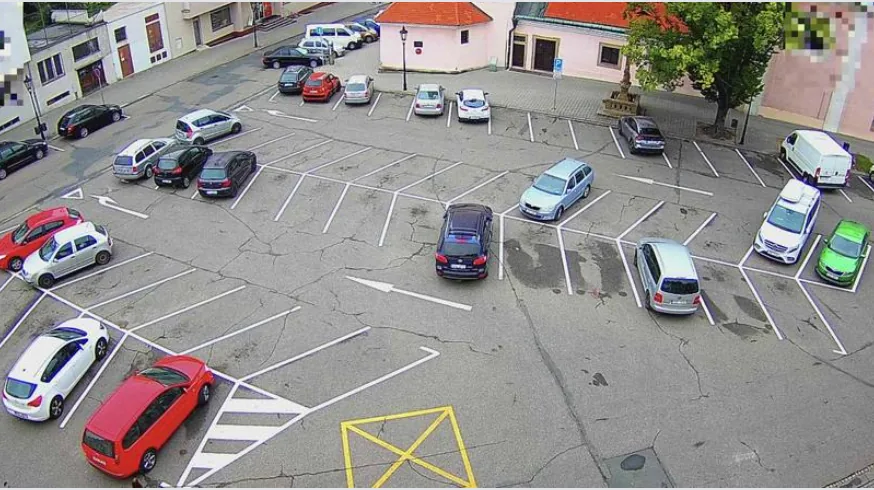
GoodVision Parking Monitor gives your city the live status of every parking space from cameras, existing or new, with nothing dug into the road. It flags overstays, vehicles across two bays and two vehicles in one bay, and pushes each event to your enforcement or parking-guidance system by webhook.
Real-Time Occupancy
The live status of every monitored space across lots, street parking and garages, with history kept so you see usage by time of day and day of week.
One Day on Site
Viewpoints are assessed remotely first. Cameras go in and connect the same day, and live dashboards and API access follow within hours.
Private by Design
Inference runs at the edge. Only anonymized events and aggregates go to the cloud, and no biometric identification is used.
Real-Time Traffic Monitoring
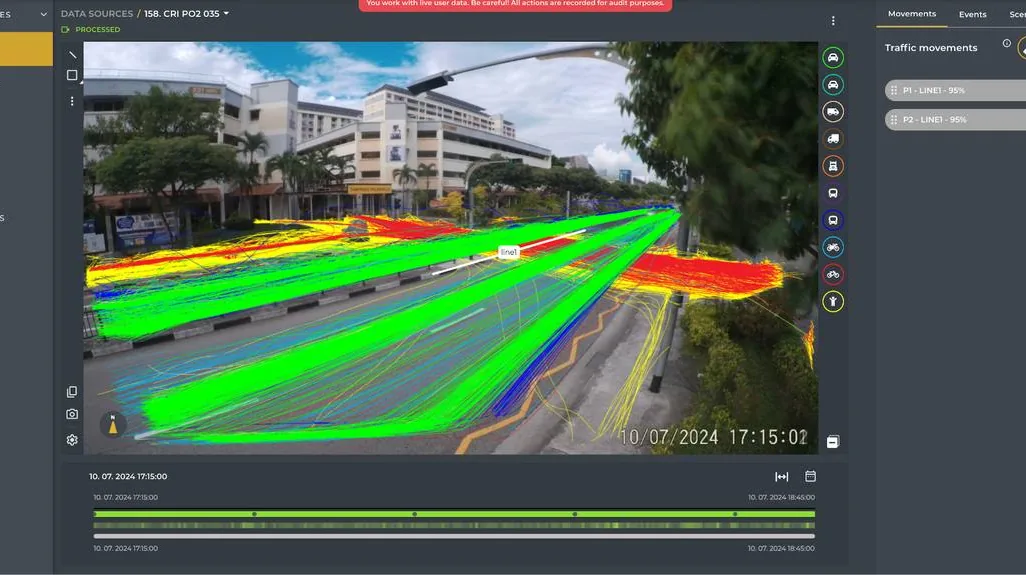
GoodVision Live Traffic turns your junction and street cameras into continuous counts, flow, speed, density and congestion levels, per lane and per direction. Your operators watch it on live dashboards, or your traffic management system pulls it through the REST API, and each event reaches your systems over HTTPS in under a second.
Every Road User
Vehicles, bicycles and pedestrians counted per approach, per movement and in zones, live, so the most vulnerable road users are counted too.
Congestion per Lane
Congestion level reported for each lane, banded Light, Moderate and Heavy, alongside average and 85th-percentile speed.
Cameras of Any Brand
GoodVision reads standard RTSP streams in H.264 or H.265 from cameras of any brand, and scales from a single camera to thousands.
Ready for Connected and Autonomous Mobility
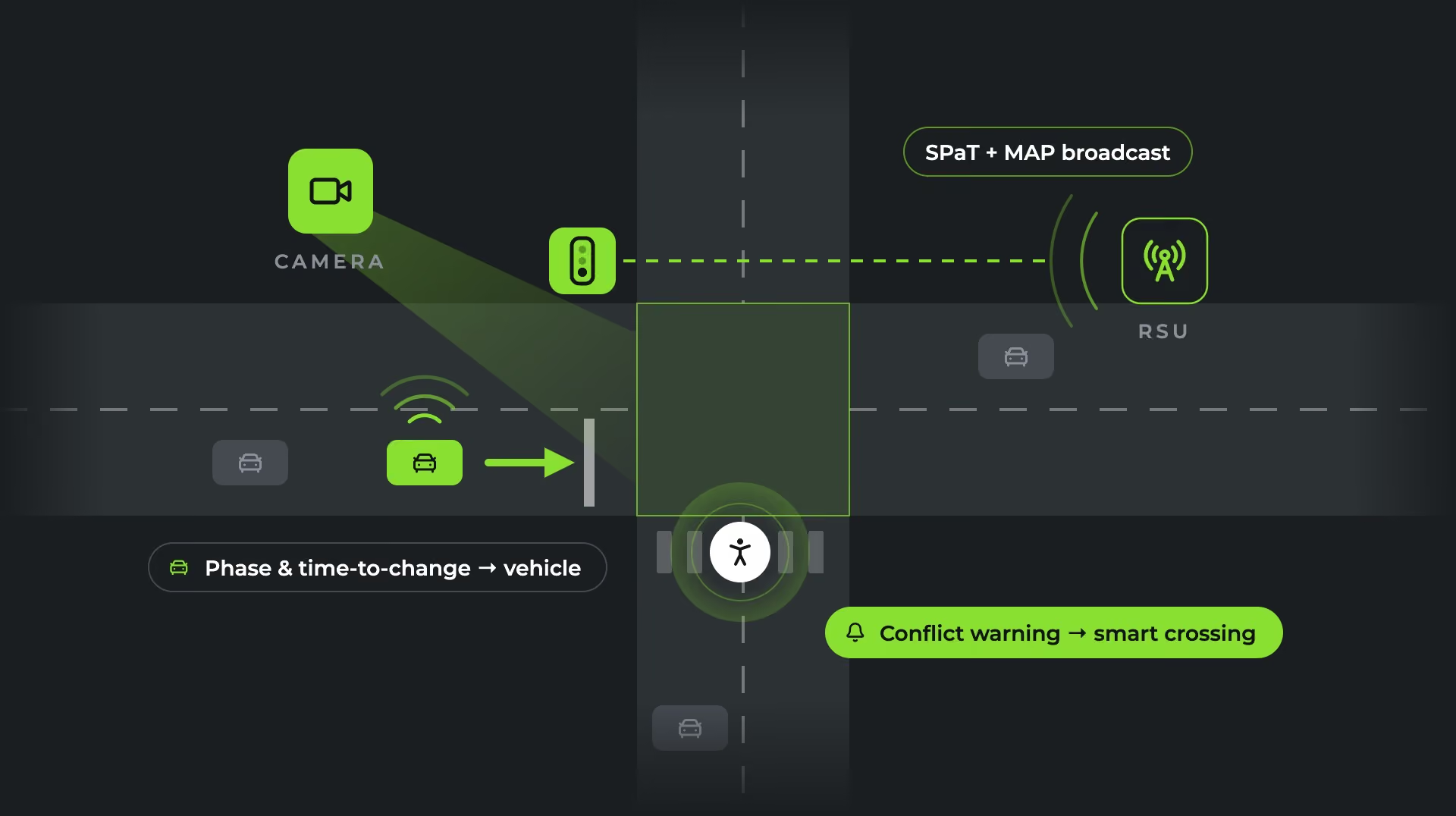
GoodVision fuses its trajectory data with your controller's SPaT data to deliver real-time SPaT and MAP messages to connected vehicles and V2X roadside units. They get accurate, low-latency awareness of signal phase, time to change and lane geometry, from an independent line of sight mounted on the infrastructure.
SPaT and MAP Messages
Signal phase, time to change and lane geometry, delivered in real time to connected vehicles and V2X roadside units.
Conflict Data for Smart Crossings
The same PET and TTC conflict data goes to smart-crossing systems and connected vehicles, warning of a pedestrian entering a conflict zone or a cyclist in a blind spot.
An Independent Line of Sight
Awareness from roadside cameras, beyond what a vehicle's own sensors can see, so the intersection becomes an active safety participant.
Proven at Scale, Piloted on Your Own Intersections
GoodVision has customers in more than 50 countries and is camera-agnostic. A pilot is scoped case by case, on your existing cameras or cameras we supply, and keeps all data inside your own network throughout, so there is no data-sharing agreement to clear before you see the first result.
Device Ships to Site
A pre-configured edge device goes on the pole, in the cabinet or at your traffic management center.
Connect Your Cameras
Your existing live camera feeds, directly or through your video management system.
Configure the Use Case
Set up the use case you want to test.
Live on Real Traffic
The system goes live and produces data from your own intersections on day one.
Three Ways to Run It
In the camera, on supported smart cameras. On an industrial edge unit next to your existing CCTV. Or on your own GPU server, with any camera. Events go to your data lake over HTTPS, or into GoodVision dashboards with remote parameter tuning.
Running on City Streets Today
Municipal districts, city integrators and survey firms run GoodVision on city streets today. Each row describes the customer by segment and region, gives the number that made the project concrete and says what it delivered. All three come from published case studies.
Five months of continuous monitoring at three of the district's busiest junctions, from one standard IP camera per site, to verify the real traffic load.
Live Traffic on a city's existing IP cameras, integrated with the integrator's traffic control system through the API, with alerts in under a second.
Hour-by-hour parking occupancy over three consecutive days, delivered within 72 hours of the cameras coming down.
Questions Cities Ask
These are the questions that decide whether GoodVision fits your city: whether it runs on your cameras, what it detects, where the video goes and how the data reaches your traffic management center. Each answer is short and gives you the facts behind it.
Does It Work With the Cameras We Already Have?
In most cases, yes. GoodVision reads standard RTSP streams in H.264 or H.265, from 640x480 up to 1920x1080, at 10 to 50 frames per second, from cameras of any brand.
Do You Detect Red-Light Running?
It can be built for your intersections as a custom scenario, and so can illegal turns, illegal lane use and stop-sign violations. The violations that run live today are wrong-way driving, speed limit violations, vehicle stops and illegal parking.
Where Does the Video Go?
Processing runs at the edge or on your own servers. For parking, only events and aggregates go to the cloud, encrypted and protected with premier security.
Can It Feed Our Traffic Management Center?
Yes. Events go out over HTTPS in under a second, webhooks push parking sessions and violations, and the REST API serves counts, speeds and occupancy from one second to 24 hours.
How Long Does a Parking Deployment Take?
One day on site. Viewpoints are assessed remotely first, cameras go in and are connected the same day, and live dashboards follow within hours.
Who Owns the Data?
You do. GoodVision is transparent about data ownership and does not trade customer data.
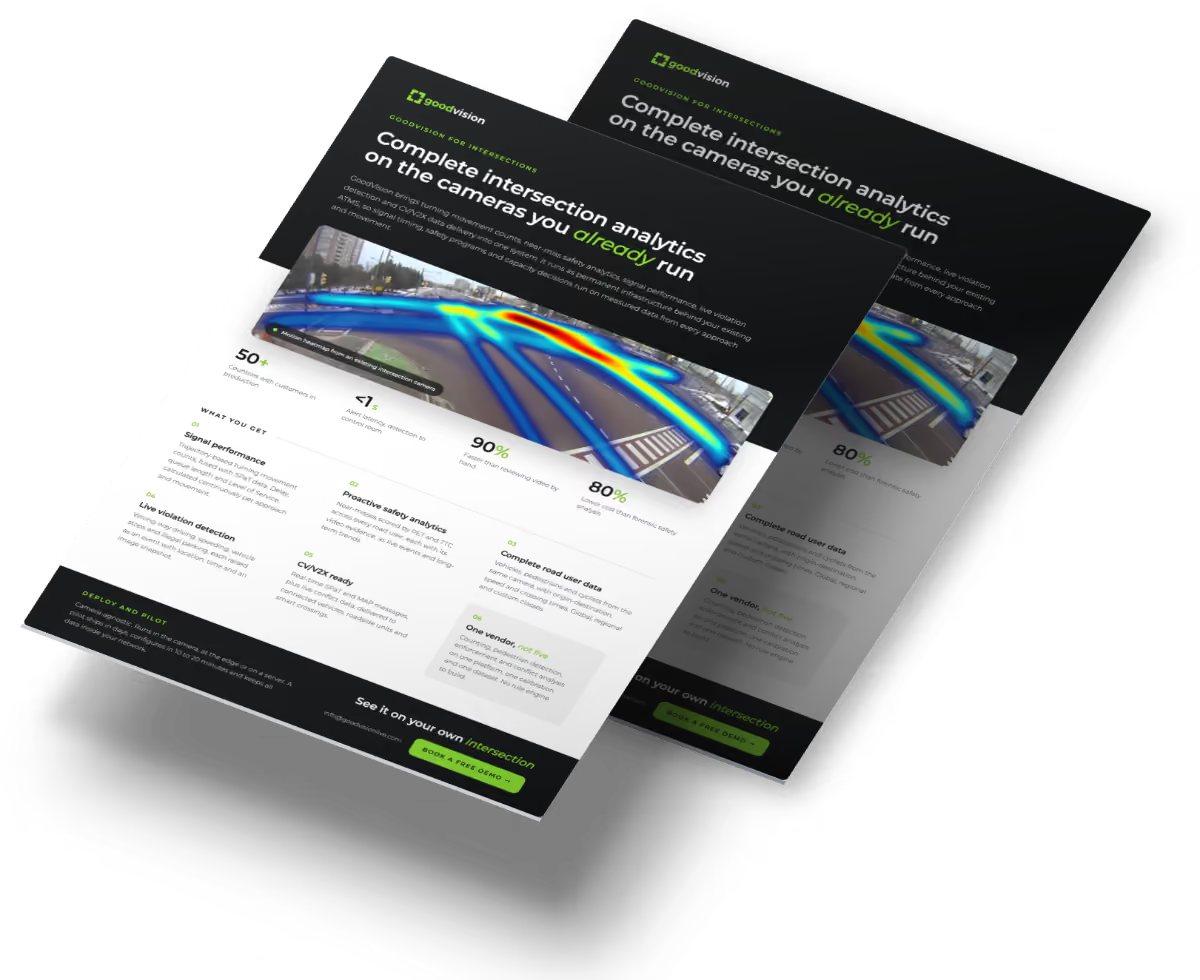
Take the Intersection Analytics One-Pager
The essentials of this page on one printable sheet: what GoodVision measures at an intersection, how it replaces separate counting, safety and enforcement systems, and how a pilot runs. Share it with your signal, safety and IT teams before the first call.
PDF, one page, 1.4 MB
See Your Busiest Intersection Through GoodVision
Send us a recording from one of your city cameras and we will show you the counts, conflicts and queues it already contains.